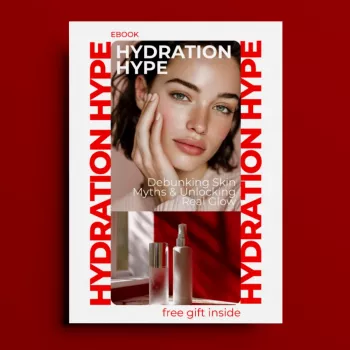
Skin “hydration” is often treated like a single switch—drink more water, buy a richer cream, and glow instantly. In reality, hydrated-looking skin comes from how well the skin barrier holds water, how products attract and seal moisture, and how daily habits either support or disrupt that balance. This guide breaks down common hydration myths, explains what dryness vs. dehydration really means, and offers practical, skin-type-friendly steps for lasting comfort and radiance.
Hydration refers to water content in the outer layers of skin. Whether that water stays put depends heavily on your barrier—especially the lipids that help prevent water from escaping. When the barrier is stressed, transepidermal water loss (TEWL) rises, and skin can feel tight, flaky, or reactive even if it looks shiny or produces plenty of oil.
That “real glow” people chase usually comes from smooth texture and even light reflection—think comfortable, cushioned skin rather than slick, surface-level shine. Over time, barrier-supporting routines tend to outperform aggressive “instant glow” tactics (like harsh scrubs or too-frequent acids) that can trigger irritation and rebound dryness.
| Term | What it describes | Common signs | What usually helps |
|---|---|---|---|
| Dry skin | Low oil (lipids) in the barrier | Roughness, flaking, tightness, irritation | Gentle cleansing, ceramides, emollients, occlusives |
| Dehydrated skin | Low water content in outer layers | Tightness, dullness, fine lines look more obvious; can be oily | Humectants + barrier support + adequate occlusion |
| Compromised barrier | Higher TEWL, disrupted lipids | Stinging, redness, reactive skin | Simplify routine, avoid over-exfoliation, use bland moisturizers and sunscreen |
| Oily but dehydrated | Oil present, water retention low | Shine with tight feel; makeup separates | Light humectant serum + gel-cream + non-greasy sunscreen |
Hydration from within supports overall health, but skin’s day-to-day water balance is strongly influenced by barrier condition and environment (low humidity, wind, indoor heating/AC). If overall fluid intake is low, correcting that can help. Once basic needs are met, though, drinking extra water rarely creates a rapid “glass skin” effect.
Topical hydration tends to feel more immediate because it addresses evaporation at the surface: water-attracting ingredients plus barrier lipids plus a seal that slows moisture loss. If skin feels fine in summer but suddenly tight in winter, that’s often an environment-and-barrier issue more than a “not enough water” issue. For practical, long-haul results, lean on consistent barrier care—especially right after cleansing.
Hyaluronic acid (HA) is a humectant, meaning it helps attract water. But if HA is used without a supportive moisturizer on top, that water can evaporate and leave skin feeling tight—especially in dry climates or when the barrier is already compromised.
More layering isn’t always better, either. Applying multiple humectant-heavy products can overwhelm sensitive skin, and the vehicle matters: a gentle HA cream may feel calming, while a strong, fast-drying serum can feel “grabby” on irritated skin.
For best results, apply humectants to slightly damp skin, then follow with an emollient/occlusive step suited to your skin type. Also consider well-tolerated alternatives and complements like glycerin, panthenol, amino acids, or low-percentage urea, which can hydrate and soften without the “tight film” sensation some people get from heavy HA layering.
Oils mostly reduce water loss and soften texture; they don’t add water to skin the way humectants do. That’s why oily skin can still be dehydrated—especially after over-cleansing, harsh acne treatments, or frequent exfoliation that elevates TEWL and can even trigger more oil production as skin tries to compensate.
For more background on dryness care and barrier basics, see guidance from the American Academy of Dermatology Association and the National Eczema Association.
A practical reset is often simple: pause strong actives for 1–2 weeks, cleanse gently, use a bland moisturizer, and wear sunscreen daily. If you notice cracking, eczema-like patches, or persistent burning, consider professional evaluation to rule out dermatitis or other conditions. For a deeper look at skin structure and barrier function, the NCBI Bookshelf offers comprehensive references.
If you want a structured, no-fluff guide you can revisit whenever your skin changes with the season, explore the Hydration Hype: Debunking Skin Myths & Unlocking Real Glow eBook.
Oil (sebum) is lipid, while dehydration refers to low water content in the outer layers. Over-cleansing or strong actives can increase TEWL, leaving skin tight but shiny; try gentler cleansing, a humectant layer, and a lightweight moisturizer.
It can help, but it’s most comfortable when applied to slightly damp skin and followed by a moisturizer (and sometimes a light occlusive) to slow evaporation. Climate and barrier health affect whether HA feels plumping or tight.
Keep it minimal: gentle cleanser, optional light humectant serum, non-comedogenic moisturizer, and daily sunscreen. Change one step at a time and patch test to avoid confusing irritation with “purging” or dryness.









Leave a comment