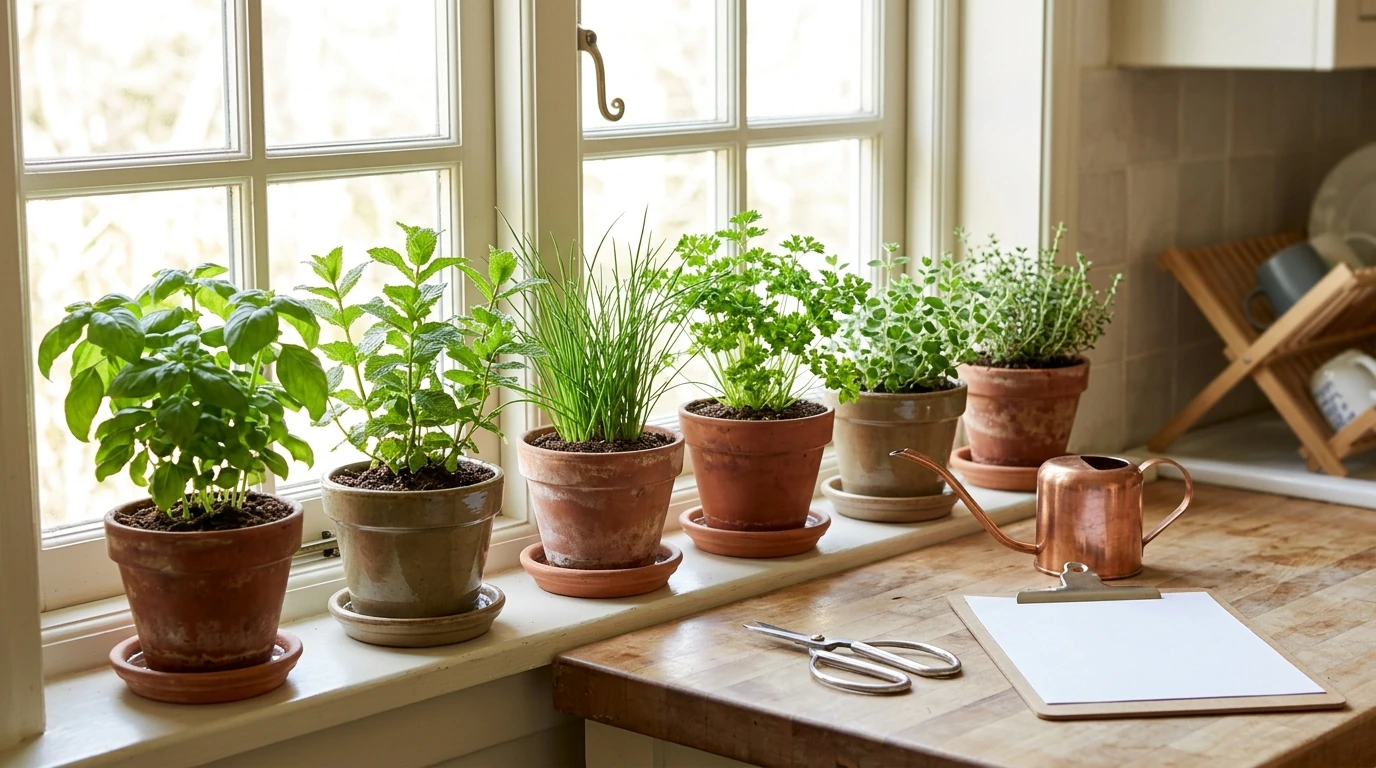
Fresh herbs can thrive on a bright windowsill with a few smart setup choices. Indoor herb gardening doesn’t need fancy gear or a big learning curve—just steady light, the right soil, and a simple watering rhythm. Below is a beginner-friendly kitchen guide to getting set up, choosing easy herbs, and keeping care consistent with a printable-style checklist routine.
Most indoor herb issues trace back to two things: not enough light and too much water. Start with a setup that makes both easier to manage.
For more detailed indoor herb basics, see the University of Minnesota Extension guide to growing herbs indoors and Penn State Extension’s overview of houseplant watering basics.
Start with forgiving herbs that bounce back quickly and don’t require perfect timing. These options are beginner-friendly and practical for everyday cooking.
If you’re potting several herbs together on one tray, group them by watering style: basil and parsley tend to want a bit more consistent moisture, while thyme and oregano prefer drier cycles.
Consistency beats intensity indoors. A small, repeatable routine keeps plants compact, flavorful, and less prone to pests.
If you use grow lights, keep the light close enough to prevent stretching and run it on a consistent timer. For container-growing fundamentals that translate well indoors, the Royal Horticultural Society guide to growing herbs in pots is a helpful reference.
Match each herb to your brightest space and a watering rhythm you can keep. When light is limited, prioritize chives and parsley; reserve your sunniest window for basil, thyme, and oregano. If overwatering is a recurring issue, thyme and oregano are typically more forgiving than parsley.
| Herb | Light level | Watering rhythm | Beginner difficulty | Harvest tip |
|---|---|---|---|---|
| Basil | Bright direct / very bright | When top inch is dry | Easy (needs warmth) | Pinch above a leaf pair to branch |
| Mint | Bright indirect to bright | Slightly moist, not soggy | Very easy | Cut stems back often to stay compact |
| Chives | Moderate to bright | When top inch is dry | Very easy | Snip outer blades; leave some growth |
| Parsley | Moderate to bright | More consistent moisture | Easy (slow start) | Cut outer stems at the base |
| Oregano | Bright direct / very bright | Let soil dry more | Easy | Trim tips to prevent woody stems |
| Thyme | Bright direct / very bright | Let soil dry between | Easy (hates wet feet) | Clip small sprigs; don’t strip bare |
Printable kitchen herb checklist and beginner indoor herb guide is a ready-to-use option to keep light, watering, and harvesting on track—especially during the first month when indoor herbs are most sensitive.
Basil, mint, chives, parsley, oregano, and thyme are reliable indoor options. If light is only moderate, chives and parsley usually cope better; basil, thyme, and oregano perform best in the brightest spot you have.
Water when the top inch of soil feels dry, then water thoroughly until it drains and empty the saucer. This prevents roots from sitting in water while still giving the plant a deep soak.
A bright window can be enough for many herbs, but low light often causes pale, leggy growth. If your window light is weak or days are short, a small grow light on a timer can help keep plants compact.












Leave a comment