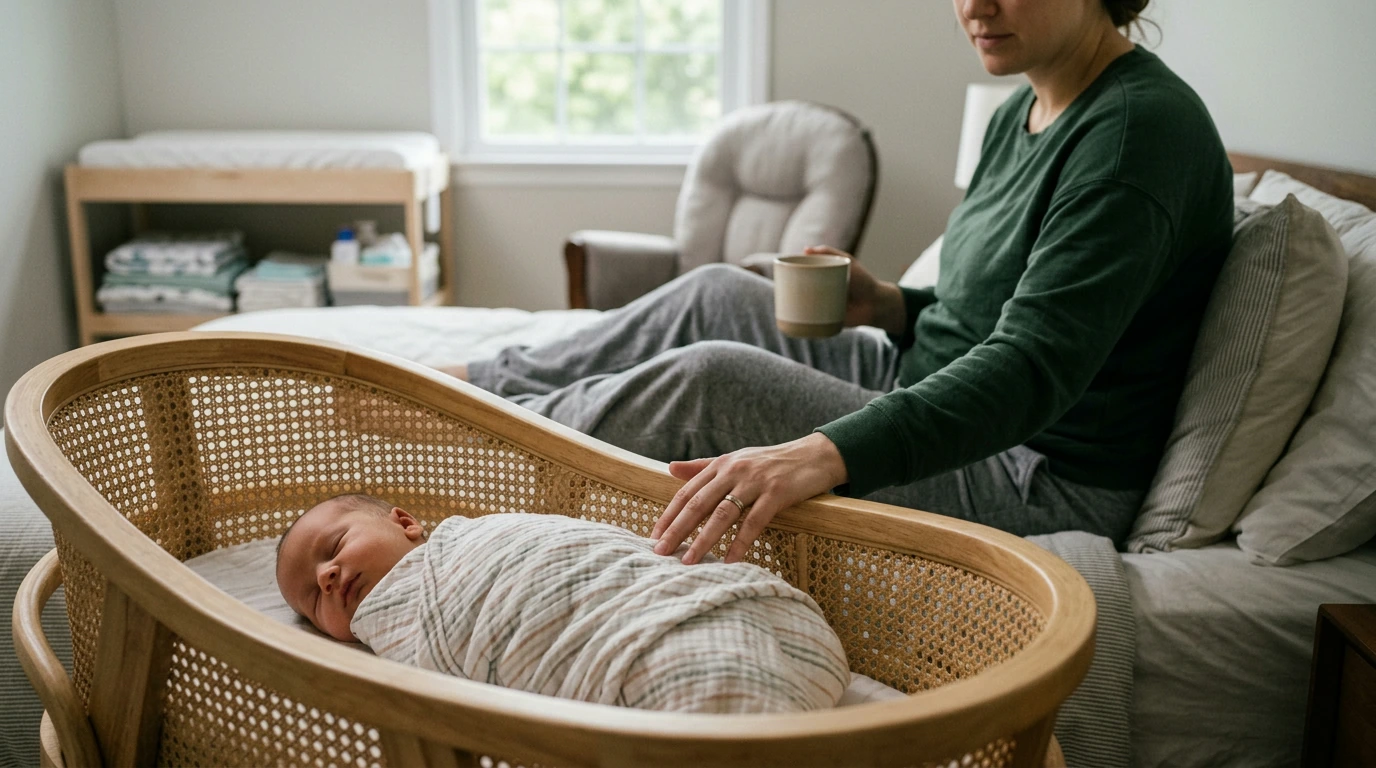
The 5-5-5 rule is a simple postpartum recovery guideline that encourages new mothers to slow down and heal in stages: 5 days in bed, 5 days on the bed, and 5 days near the bed. It’s a framework meant to prioritize rest, reduce physical strain, and support healing after birth—especially during the tender first two weeks.
For the first five days, the focus is on staying in bed as much as possible. This is a time for sleeping, feeding the baby, skin-to-skin contact, and letting others handle household tasks. If getting up is necessary, keep it brief and slow to avoid increasing bleeding or soreness.
Days 6–10 are often described as “on the bed,” meaning you can sit up more, eat meals while seated, and do light self-care. The goal is still to avoid long periods of standing, heavy lifting, or chores that strain the pelvis and core.
Days 11–15 expand your radius: short walks around the room or home and gentle movement, while keeping rest as the priority. Many people use this stage to notice how their body responds—backing off if pain, pressure, or heavier bleeding shows up.
This rule can help reduce overexertion when adrenaline and visitors make it tempting to “bounce back.” It also supports recovery of tissues affected by pregnancy and birth, whether you had a vaginal delivery or a C-section (with individualized medical guidance). Everyone’s timeline is different, so the rule works best as a flexible boundary, not a test to pass.
For a deeper breakdown and practical tips for setting up support at home, visit the main article on the 5-5-5 rule for postpartum recovery.
Heavier bleeding, increased pain or pressure, worsening swelling, dizziness, or feeling unusually depleted can all be clues to scale back. If symptoms feel sudden, severe, or concerning, contact a healthcare provider promptly.













Leave a comment